



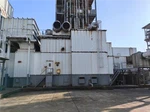

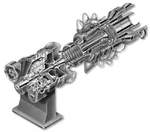
Condensing Steam Turbine
Dongturbo Electric Company Ltd. (hereinafter call "DTEC") is a professional steam turbine solution provider with ISO and CE certificate, mainly engaged in manufacturing Steam Turbines, Generators, and provide power plant EPC, EPCC and BOT solutions, also supply the equipment Spare Parts, O&M and Retrofitting Service etc.. DTEC is a manufacturing enterprise integrating steam turbine design, manufacturing, installation and service for Power Generation and Industrial Driven Purpose (Pump, Fan etc.) application in the worldwide.
The main products include all types of steam turbines, including condensing steam turbines, back pressure steam turbines, extraction steam turbines, etc. We focus on the development and promotion of single-layer quick-installation and three-station one-stop steam turbines, with high-speed, high-efficiency and energy-saving features, as well as various generators and electrical control equipment matching the steam turbines.
DTEC also can provide customers with one-stop solution for power plant project design, construction, procurement, installation, and commissioning, realizing a true turnkey project, shortening the engineering cycle for customers, and greatly reducing project costs.


Why choose us?
Quality assurance
ISO 9001 certified, Third party inspection available.
Good service
Quick response to customer requirement,Assign special personnel to dock customers.
Reaso nable price
Provide suitable solution according to customer's requirement to save cost.
Fast delivery
Focused on power industry, make reasonable stock ensureour fast delivery.
What is Condensing Steam Turbine
Condensing steam turbines are most commonly found in thermal power plants. In a condensing steam turbine, the maximum amount of energy is extracted from the steam. This is achieved by passing the exhaust steam into a condenser, which condenses the exhaust steam from the low-pressure stages of the main turbine. The condensing turbines are able to use the total energy of the inlet steam flow to a maximum extent. Therefore, this type of turbine is used for power utilities that want to supply electricity to consumers as much as possible.
Advantages of Condensing Steam Turbine
- Since the steam turbine is a rotary heat engine, it is particularly suited to be used to drive an electrical generator.
- Thermal efficiency of a steam turbine is usually higher than that of a reciprocating engine.
- Very high power-to-weight ratio, compared to reciprocating engines.
- Fewer moving parts than reciprocating engines.
- Steam turbines are suitable for large thermal power plants. They are made in a variety of sizes up to 1.5 GW (2,000,000 hp) turbines used to generate electricity.
- In general, steam contains high amount of enthalpy (espacially in the form of heat of vaporization). This implies lower mass flow rates compared to gas turbines.
- In general, turbine moves in one direction only, with far less vibration than a reciprocating engine.
- Steam turbines have greater reliability, particularly in applications where sustained high power output is required.

Types of Condensing Steam Turbine
Condensing turbines
Condensing turbines are most commonly found in electrical power plants. These turbines receive steam from a boiler and exhaust it to a condenser. The exhausted steam is at a pressure well below atmospheric, and is in a partially condensed state, typically of a quality near 90%.
Non-condensing turbines
Non-condensing turbines are most widely used for process steam applications, in which the steam will be used for additional purposes after being exhausted from the turbine. The exhaust pressure is controlled by a regulating valve to suit the needs of the process steam pressure. These are commonly found at refineries, district heating units, pulp and paper plants, and desalination facilities where large amounts of low pressure process steam are needed.
Reheat turbines
Reheat turbines are also used almost exclusively in electrical power plants. In a reheat turbine, steam flow exits from a high-pressure section of the turbine and is returned to the boiler where additional superheat is added. The steam then goes back into an intermediate pressure section of the turbine and continues its expansion. Using reheat in a cycle increases the work output from the turbine and also the expansion reaches conclusion before the steam condenses, thereby minimizing the erosion of the blades in last rows. In most of the cases, maximum number of reheats employed in a cycle is 2 as the cost of super-heating the steam negates the increase in the work output from turbine.
Extracting turbines
Extracting type turbines are common in all applications. In an extracting type turbine, steam is released from various stages of the turbine, and used for industrial process needs or sent to boiler feedwater heaters to improve overall cycle efficiency. Extraction flows may be controlled with a valve, or left uncontrolled. Extracted steam results in a loss of power in the downstream stages of the turbine.
Power generation
In the realm of electricity production, steam turbines stand as the backbone of most power plants, playing a pivotal role in transforming raw energy into a usable form. These turbines are integral in facilities ranging from traditional coal-fired power stations to nuclear reactors, and even in renewable energy plants like concentrated solar power systems. They work by converting the high-pressure steam generated in boilers into mechanical energy, which in turn drives generators to produce electricity. This electricity is then distributed through power grids, lighting up cities, powering industries, and energizing homes. The efficiency and reliability of steam turbines make them a cornerstone in the energy sector, essential for meeting the growing electricity demands of modern society.
Marine propulsion
Steam turbines also play a crucial role in the maritime industry, propelling large ships across the world’s oceans. In this application, the mechanical energy produced by the turbine is used to drive the ship’s propellers. This provides a powerful and steady source of propulsion, enabling vessels such as cargo ships, cruise liners, and even some naval ships to navigate global waters. The durability and efficiency of steam turbines in converting thermal energy to mechanical motion make them ideal for long voyages, ensuring ships have the necessary power for their journeys.
Industrial processes
Beyond power generation and marine propulsion, steam turbines are instrumental in various industrial processes. In sectors like manufacturing and refining, they are used to drive machinery and equipment. This includes applications in petrochemical plants, where turbines might power compressors and pumps, and in manufacturing facilities, where they can drive assembly lines or processing units. The versatility of steam turbines in these settings highlights their ability to adapt to different operational needs, providing a reliable source of mechanical or electrical power across a wide range of industrial applications.
Casing
As the name implies, the casing is used to be the main cover of the parts in the steam turbine. With the casing, the steam turbine component is not directly exposed from the outside so it remains durable.
Rotor
There is no steam turbine without a rotor. The rotor is the part of the turbine that rotates and is quite a lot. There are two parts of the rotor in the steam turbine, the Rotor Shaft (serves as a component for the installation of discs along the axis) and the Rotor Blades (functions as a receiver for the force of steam kinetic energy).
Disc
The disc has a function as a place where the blades are installed radially between the shafts.
Nozzle
The nozzle is useful for steam expansion media which can later convert existing potential energy into kinetic energy.
Bearings
The bearings inside the steam turbine are useful for supporting both ends of the shaft. Besides that, it is also useful as a receiver of the burden caused.
Seal
A seal is used to prevent undesirable things such as steam leakage. Usually, the seal is installed around the shaft.
Clutch
The coupling functions as a link between the work of a steam turbine with a mechanism that is driven by a steam turbine.
Regular inspection: Regular inspections are the foundation of effective steam turbine maintenance. Schedule routine inspections to assess the overall condition of the turbine, focusing on areas such as:
- Rotor condition: Check for signs of wear, erosion, or corrosion.
- Casing and casing bolts: Inspect for leaks, cracks, or loose bolts.
- Bearings: Monitor bearing temperatures and vibrations.
- Steam path components: Examine blades, nozzles, and diaphragms for damage.
- Lube oil system: Ensure proper oil levels and quality.
- Lubrication maintenance: Proper lubrication is essential to ensure the longevity of a steam turbine.
Maintenance of the lube oil system: Regularly check oil levels, filter conditions, and oil quality. Lubricate bearings and other moving parts as per the manufacturer’s recommendations. Monitor oil temperatures and pressures to detect issues early.
Cleaning and debris removal: Steam turbines can accumulate dirt, debris, and deposits over time, affecting their efficiency. Periodically clean turbine components, including blades and nozzles. Remove debris from the turbine casing and cooling passages.
Inspect and clean condensers and cooling water systems.
Balancing: Balancing the rotor is crucial to prevent vibrations and excessive wear. Perform dynamic balancing as part of routine steam turbine maintenance checklist key steps to prevent breakdowns. Monitor vibrations during operation and address any unusual patterns promptly.
Control and safety systems: Maintain and test control and safety systems regularly.
Check and calibrate control sensors, valves, and actuators. Conduct safety system tests to ensure quick response to abnormal conditions.
Steam quality: Steam quality greatly impacts turbine performance and lifespan. Monitor steam quality, including pressure, temperature, and moisture content. Install steam quality sensors and alarms to detect deviations.
Alignment checks: Proper alignment between the turbine and its associated components is essential. Periodically check alignment of the turbine with the generator or other connected equipment. Correct any misalignments to prevent excessive stress on the turbine shaft.
Training and documentation: Ensure that steam turbines maintenance checklist key steps to prevent breakdowns personnel are well-trained and have access to comprehensive documentation.
Providing training on safe maintenance procedures is an important aspect of the steam turbines maintenance checklist key steps to prevent breakdowns. Keep detailed records of maintenance activities, inspections, and repairs.
How Condensing Steam Turbine Works
Steam inlet
The steam turbine operates by receiving high-pressure and high-temperature steam from a steam generator, such as a boiler. The steam enters the turbine through an inlet valve or nozzle.
Expansion of steam
As the high-pressure steam enters the turbine, it passes through a series of stationary and rotating blades or vanes called stages. The steam expands and its pressure and temperature gradually decrease as it passes through each stage.
Steam energy conversion
The expansion of steam in the turbine causes the steam to exert a force on the turbine blades. This force creates a rotational motion of the turbine rotor.
Rotor and stator
The turbine consists of two main components: the rotor and the stator. The rotor is the rotating part of the turbine, connected to a shaft. The stator is the stationary part that houses the blades and provides a passage for the steam flow.
Impulse and reaction stages
Steam turbines can have either impulse stages or reaction stages, or a combination of both. In impulse stages, the steam expands only in the nozzles and imparts its kinetic energy onto the rotor blades. In reaction stages, the steam expands both in the nozzles and in the moving blades, thereby generating both kinetic energy and pressure drop.
Energy extraction
As the steam expands and passes through the turbine stages, its thermal energy is gradually converted into mechanical energy. The steam's high-velocity flow causes the rotor blades to rotate, which in turn rotates the turbine shaft.
Power output
The rotation of the turbine shaft is coupled to a generator or other machinery to produce useful work. In power generation applications, the turbine shaft drives a generator to produce electrical power.
Exhaust and condensation
After passing through the turbine stages, the low-pressure and low-temperature steam exits the turbine through an exhaust port. In some cases, the exhaust steam is condensed and recycled back into the steam generator for further use, increasing overall efficiency.
Control and safety systems
Steam turbines are equipped with control systems to regulate the steam flow, pressure, and power output. Safety systems are also in place to protect the turbine from excessive pressure, overspeed, and other potentially hazardous conditions.
Our Factory
The main parts and key components of the products have all realized CNC machining, including Japanese Mitsubishi five-axis gantry machining center, Italian tower base horizontal rotor groove milling machine, 10-meter CNC heavy-duty horizontal lathe, 8-meter CNC vertical lathe, etc., with high precision, strong reliability and advanced processing technology And other characteristics, to achieve the standardization and modularization of product components, and improve the versatility and interchangeability of product components.
